

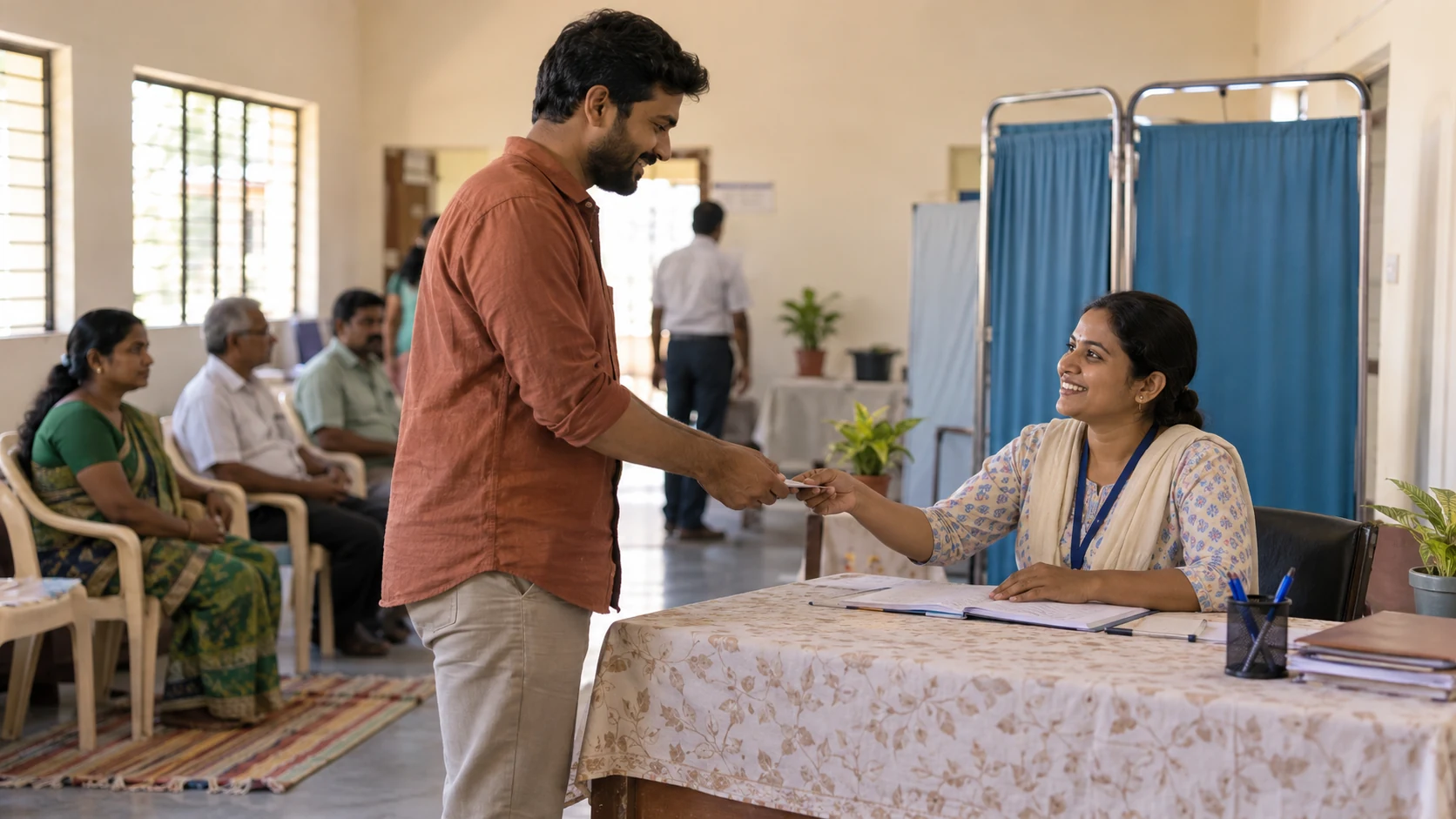
AI-generated illustration.
Before Leaving the Camp
Leela reached the doorway with her folder pressed beneath her arm and stopped when her brother asked how the visit had gone. She could describe the queue and the room. She could not clearly explain what she was expected to do next. She wanted to understand the next step before going home.
She had arrived that morning because a community group was hosting a health camp nearby. It was her first visit to an event of this kind. She knew where to report, but had little sense of the difference between attending a camp and arranging continuing care. In her mind, finishing all the steps inside the hall would probably mean that the matter was finished.
Her brother came along to keep her company. At the entrance, he began answering a question directed at her, then caught himself and stepped back. Leela explained why she had come in her own words. A volunteer helped her understand the order of the session and identified the qualified professional team. When she asked what the consultation would establish, the volunteer directed that question to them rather than guessing.
A chair scraped across the waiting area as someone made room for another attendee. Leela watched people collect papers and move towards the exit. She checked that her own folder was ready, hoping that when her turn ended she would know just as clearly where to go.
A conversation that moved too quickly
When her turn came, Leela spoke with a qualified clinician. What mattered afterwards was a difference between what had been explained and what she had absorbed. She heard the clinician discuss a next step, nodded while looking at the papers, and began collecting her belongings as the conversation ended.
She had understood the words as they were spoken. At the doorway, however, she could not remember whether the next contact had already been arranged. Her finger moved between two parts of the page. She wanted one of them to answer the question before her brother asked it again.
Her brother asked whether another visit had already been arranged. Leela looked through the folder. Nothing she could identify answered that question. He suggested checking with the desk, but she hesitated. Going back felt like admitting that she had not listened properly. The session was still underway, and she could see other attendees waiting for their own turn.
Then she pictured trying to reconstruct the conversation at home. Her brother would remember what she told him, not what the clinician had said. A neighbour might offer an interpretation, but would not have been part of the encounter either. She turned around. Before deciding how to act on the recommendation, she wanted to be able to describe it accurately.

Returning with one clear question
At the desk, Leela said that she needed help understanding the follow-up discussed in her consultation. The volunteer did not interpret her papers or reassure her that attendance itself meant everything was settled. Instead, the volunteer asked the qualified team how to arrange clarification. Leela waited for an appropriate opportunity to return. The pause was inconvenient, but it kept the explanation with the people responsible for it.
This time she began with the point of uncertainty. She could not tell whether the next contact was something she had to arrange herself or something the camp team had already arranged. The clinician clarified the distinction in ordinary language and identified which information in her folder related to it.
Leela then described back what she understood. In doing so, she discovered that she had mixed together the location of the camp and the place relevant to the next step. The clinician corrected that misunderstanding. There was no new result or sudden revelation. A practical ambiguity had become visible because Leela tried to explain the plan in her own words rather than simply nod again.
She asked one more question about what the visit had covered. The clinician explained the limits of that encounter and the matters discussed for follow-up. Leela pointed to the relevant note in her folder. This time she knew which part described a recommendation rather than something already completed.
The explanation belongs to the attendee
Her brother joined the final part of the clarification at her invitation. He listened rather than taking over the conversation. When the clinician asked whether the explanation made sense, Leela answered first. Having someone alongside her could help her remember the practical arrangements, but she did not want the meaning of her own visit to exist only in another person’s understanding.
There was still an administrative question about whom to contact for the arrangements discussed. That belonged at the relevant desk, where the staff explained their actual process. They did not promise an appointment they had not made or describe a possible service as a confirmed booking. Leela separated the professional recommendation from that practical information before putting the papers away again.
The second trip towards the exit looked much like the first. The same chairs lined the hall, and her folder had not grown into a dramatic bundle of answers. Yet when her brother asked what happened next, she could distinguish what the qualified team had recommended, what had been arranged, and what still required her own follow-through. She could also identify the point she would need to clarify if the arrangements did not make sense later.
Leela had finished the camp visit, not necessarily every step of her care. Understanding the distinction gave her something to work with after leaving the hall.
Outside, Leela put the folder in her bag and told her brother the next practical step in her own words. He listened, then checked the contact detail she had been given. They left with no grand declaration that everything was settled, but without having to invent an explanation on the journey home.