

AI-generated illustration.
Who Is Teaching Whom?
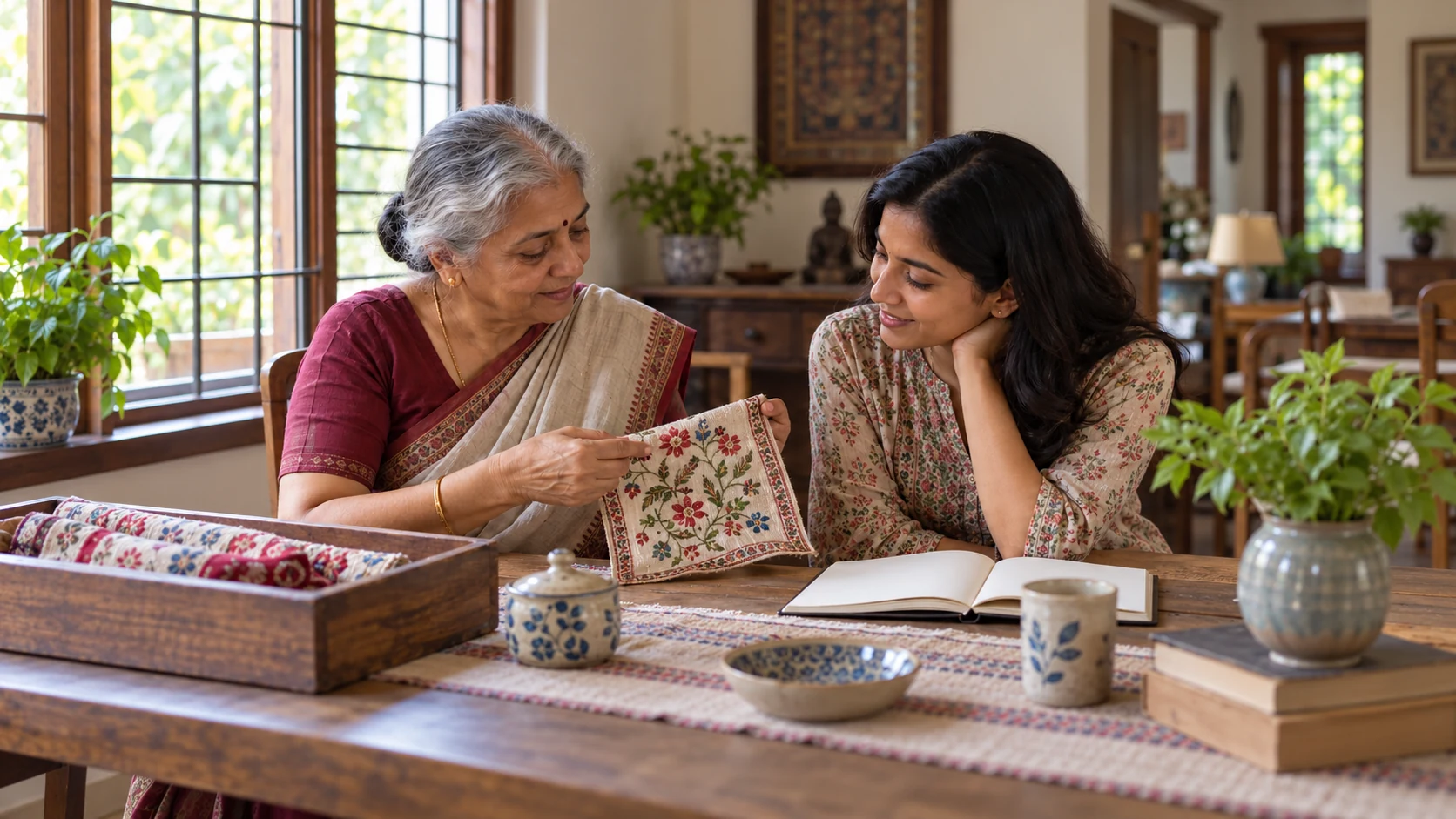
The older woman held up the cloth and asked the younger woman to show the stitch again. Across the community-room table, someone had just suggested that the elders demonstrate their traditional skills. Tara and Devika smiled. The making session had begun with a familiar assumption about generations and two participants who did not fit it.
The table held reusable paper, thread and fabric scraps. The group had planned to make simple folders and cloth sleeves for materials kept in the room. Participants had been invited to bring a small skill or choose something they wanted to try, which was how Tara and Devika came to sit together.
Tara had learned hand stitching recently and practised it with an enthusiasm that made her carry unfinished pieces in her bag. Devika had worked for years preparing clear digital documents, but had never acquired confidence with a needle. When people assumed that she would explain a traditional craft while Tara helped with technology, they assigned each woman the role in which she was least interested that afternoon.
Devika said she wanted to learn the stitch. Tara offered to demonstrate. Neither made a speech about stereotypes, and the organiser did not insist that the original plan was better balanced. A space was cleared between them. Nearby, another participant began folding paper, happy for the moment to work quietly rather than become the unofficial coordinator because he seemed capable of organising everybody.
The movement the teacher could not see
Tara made a short line of stitches while describing the steps. Her hands moved faster than her explanation. When she passed the cloth across, Devika tried to repeat what she had seen, but reached a point where the thread emerged on the wrong side. Tara began the demonstration again from the beginning. Devika stopped her at the exact movement she had missed.
It was a useful interruption. Tara had been describing what she intended to make rather than showing everything her hands were doing. A small turn of the cloth, invisible to her because it had become familiar, changed the next step for the learner. She slowed down and worked from Devika’s side of the table so that their views matched.
Devika tried again. Her line was uneven, but this time she could explain why the thread was where it was. Tara reached to correct the next stitch, then waited when Devika said she wanted another attempt first. Teaching the skill did not mean taking control of the object whenever it became untidy. Tara sat back and watched the learner make a choice she would not have made herself.
Tara placed a spare piece beside Devika’s cloth and demonstrated only the turn that had caused trouble. Devika copied it, then continued on her own piece. They no longer needed to start the whole lesson again each time the thread took an unexpected route.
A different kind of expertise
At the paper end of the table, a participant showed a folded pocket that could sit inside the cloth sleeve. Tara liked the idea, but the paper sample was too large for the piece they had started. She suggested cutting the fabric differently. Devika asked whether they could first check how the pocket would open once it was inside. She placed the two unfinished pieces together and turned them towards the table.
The opening would be awkward to reach. Tara had been concentrating on making the seam neat and had not considered how someone would retrieve the contents. Devika’s work with documents had made her interested in how another person follows a sequence. Here, without producing a document or taking over the session, she asked the same kind of question about an object: what does its user encounter first?
They tried two arrangements with loose pieces before stitching anything further. One was tidier to look at but less convenient to open. The other left a visible fold that Tara initially disliked. Devika did not insist that practical use settled every question. She asked Tara whether the fold could become part of the design rather than something to conceal. Tara found a way to place it more deliberately.
Tara held the fabric while Devika tried the pocket opening again. This arrangement worked without concealing the fold. They left the loose pieces in place long enough to test it once more, then began stitching the altered sleeve rather than returning to the original sample.
Beyond the first table
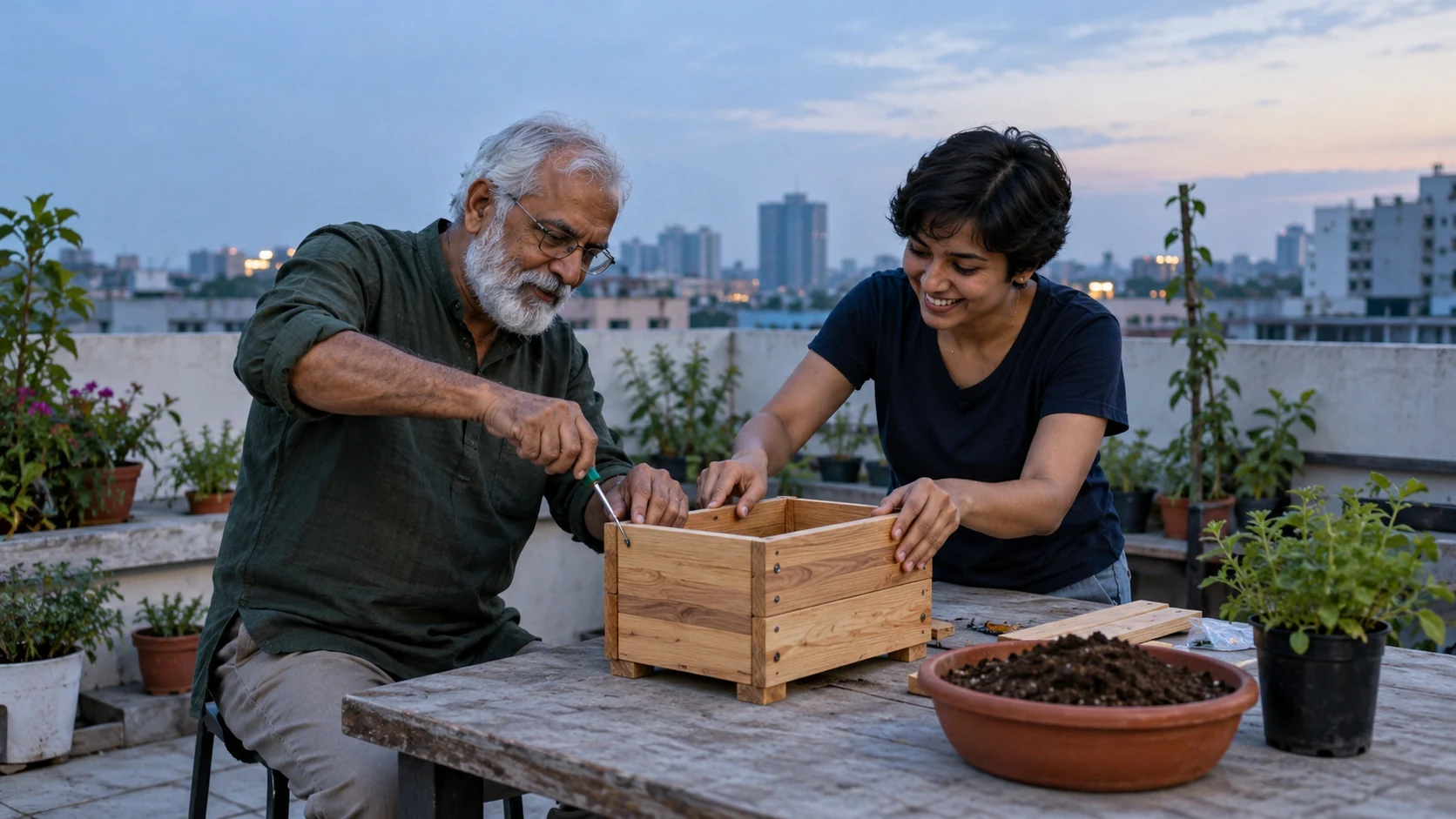
When they paused, a few participants stepped towards the balcony, where someone had been tending herbs. The conversation turned to the cloth offcuts and the small practical things people enjoyed making at home. An older woman asked a younger gardener about a plant she did not recognise. Elsewhere, a younger participant listened to an older man explain how he checked whether the pieces of a wooden planter sat square.

At the balcony, questions moved in both directions. The younger gardener knew the plant but asked about the planter’s joints. The man answering him later came back to the table to try folding a paper pocket. Nobody needed to keep the same place as teacher or learner for the whole afternoon.
Back at the craft table, Devika examined the sleeve’s unfinished edge and asked whether her stitches would hold the shape they had chosen. Tara showed her how to compare it with the sample, without promising a result before they tried it. They worked on the last section together, then placed the folded paper inside. The object opened the way they had intended. Its uneven line of stitching remained visible.
Another participant asked who had made it. Tara began to say that she had shown the stitch, then stopped because that did not describe the whole process. Devika had worked through the difficult turn, questioned the opening and helped change the arrangement. They answered that they had made it together. The phrase did not erase their different contributions; it was simply more accurate than assigning the object to the person who began as teacher.
As the materials were put away, Devika chose another scrap to practise on at home. Tara kept the first sample, which now showed her something she had not known before the session: where her demonstration became hard to follow. Each left with a different unfinished piece of learning. Neither expected to occupy exactly the same role if they met at the table again.
The sleeve stayed in the community room with its visible fold and uneven stitches. Tara took away the demonstration sample; Devika chose another scrap for practice. They had arrived with different skills and left with different questions. The object on the table held both their contributions without needing to say which generation had taught the other.